Guineo-Congolian freshwater biodiversity
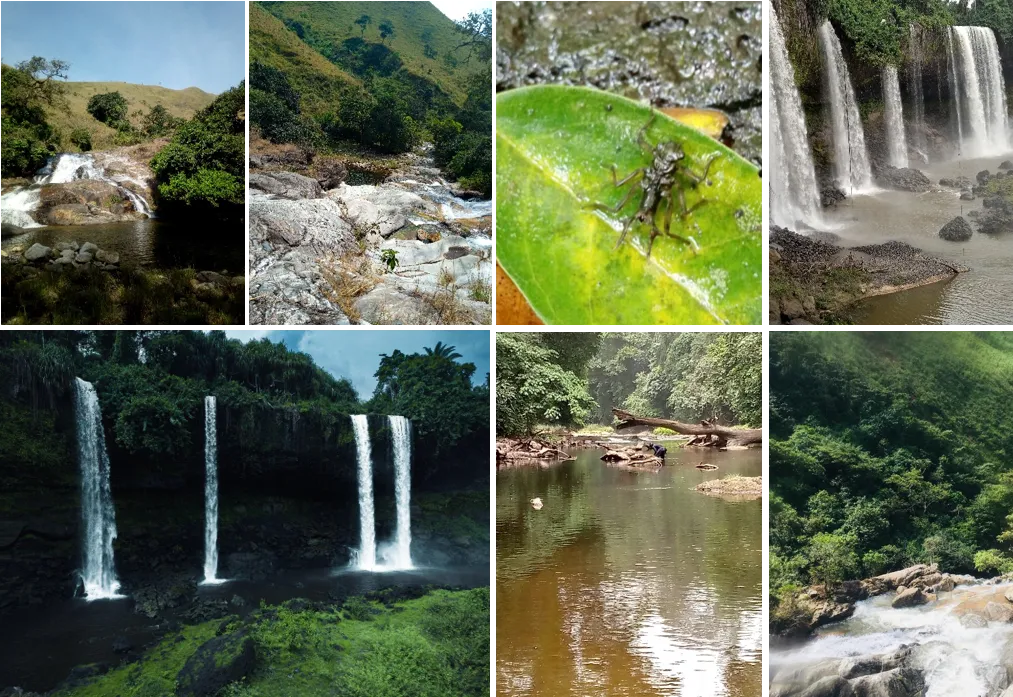
Assessing the Freshwater Biodiversity Hotspots in West Africa and the Congo Basin
Tropical freshwater macroinvertebrates are globally significant, representing nearly 80% of the world’s macroinvertebrate biodiversity, most of which remains inadequately studied. In the Afrotropics, the freshwater biodiversity crisis is exacerbated by the Wallacean shortfall, as there is inadequate knowledge of the actual or potential distributions of many freshwater taxa. Among the most important tropical biodiversity hotspots is the Guineo-Congolian Biodiversity Hotspot, which spans West and Central Africa. Interestingly, there have been reports of many threatened and endemic freshwater invertebrate species in different countries within the hotspot, but there is inadequate knowledge of their occupancy and potential distributions. Given the shortage of funding for field studies, the lack of region-based taxonomic guides, and the dearth of freshwater conservation scientists, streams and rivers in this hotspot stand the risk of losing ecologically important species, including rare, endemic, and threatened species, before they are even reported. Hence, there is a compelling need to use cost-efficient spatial tools to map the potential distributions of already described and reported species. We will also calculate the current occupancy of each species based on the number of sub-catchments occupied by that species relative to the total number of sub-catchments across the hotspot.
We have published an unique collection of freshwater macroinvertebrate records in the Guineo-Congolian Biodiversity Hotspot of Africa. See the reference below and (click here for the fullscreen interactive map):
CC BY-NC 4.0