Conservation of Cuban Dragonflies and Damselflies
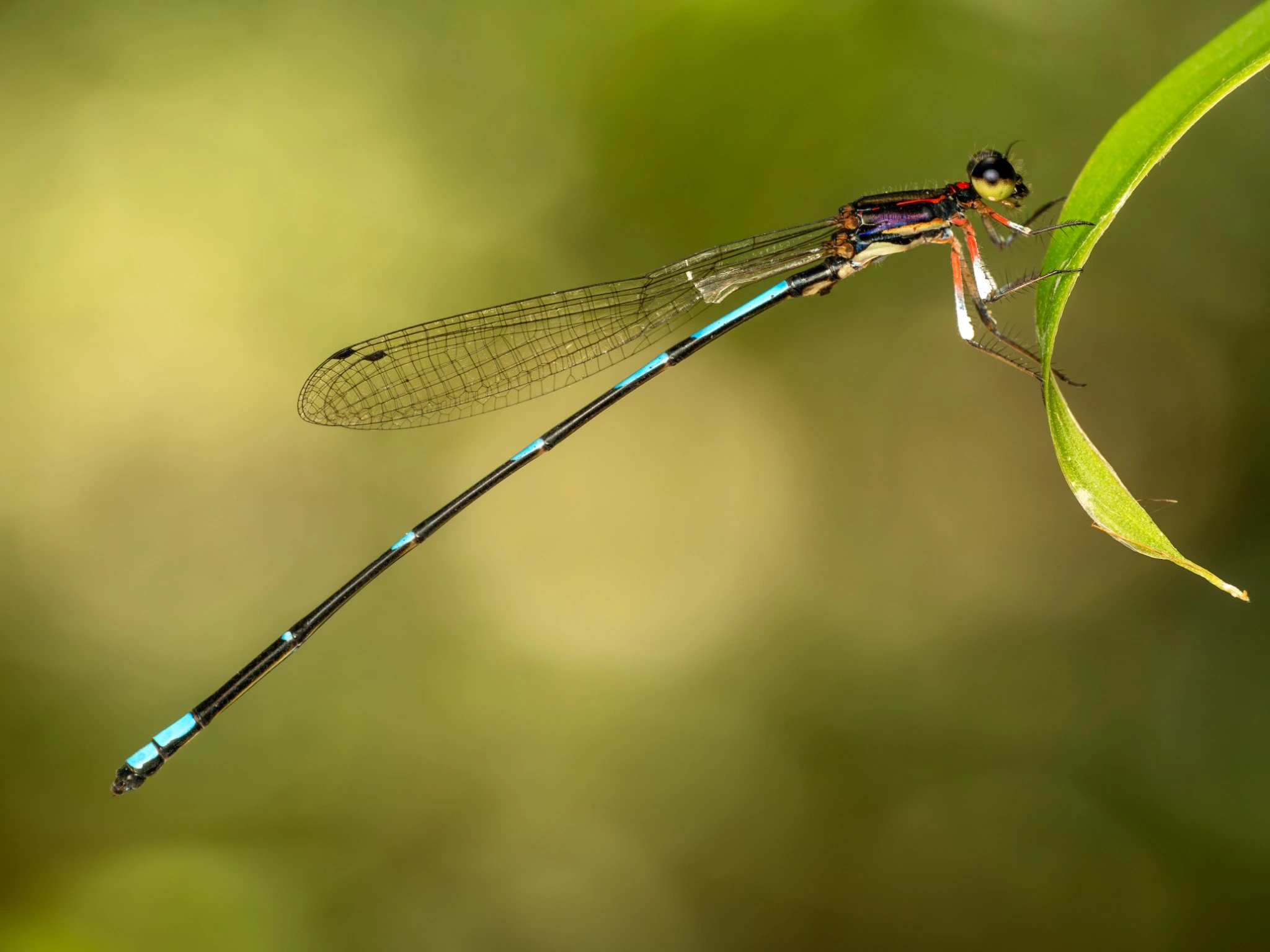
Cuba is home to a remarkable diversity of dragonflies and damselflies (Odonata), including endemic species found nowhere else in the world. Many inhabit mountain streams, forested rivers, and wetlands that are increasingly threatened by habitat degradation, hydrological alterations, and human activities.Despite their ecological importance, the distribution, habitat requirements, and conservation status of several Cuban odonates remain poorly understood.
Two ongoing conservation initiatives bring together scientific research and public engagement: Recovering the Cuban National Damselfly and Silent Extinction in the Caribbean? Investigating the Fate of the Cuban Bluet.
Recovering the Cuban National Damselfly
Recovering the Cuban National Damselfly is a conservation and storytelling project dedicated to the Blue-and-Orange Threadtail (Protoneura caligata), an endangered damselfly endemic to Cuba.
The name “Cuban National Damselfly” is symbolic rather than official. Its striking blue, red, and white colours evoke elements of Cuban identity, including the national flag and the Cuban Trogon (Priotelus temnurus), Cuba’s national bird.
This visual connection helps communicate a broader conservation message: protecting Cuba’s freshwater biodiversity depends on preserving its rivers, forests, and mountain streams.
The project combines field research, species conservation, nature photography, artistic collaboration, and documentary filmmaking to document the species’ natural history, assess habitat conditions, identify threats, and increase public awareness of freshwater conservation.
Supported by an IUCN Species Survival Commission (SSC) Internal Grant, the project has enabled extensive field surveys, ecological data collection, and the production of photographic and video materials for outreach and environmental education.
Field surveys and habitat conservation
Protoneura caligata inhabits shaded headwater streams in the Guamuhaya Mountains of central Cuba, where it depends on relatively intact riparian forests and good water quality.
Between 24 July and 8 August 2025, our team conducted 16 days of field surveys across the region to document the species’ distribution, population presence, habitat characteristics, and potential threats.
The surveys recorded:
- 77 adult individuals, including 40 males and 37 females.
- Presence across four river drainage basins in the Guamuhaya Mountains.
- A strong association with narrow, shaded streams, clear water, and well-preserved riparian vegetation.
- Localized disturbances associated with tourism, recreational activities, and waste accumulation near freshwater habitats.
These observations confirm the persistence of P. caligata across several mountain catchments while highlighting the importance of maintaining forest cover and protecting freshwater habitats.
Distribution modelling and conservation assessment
The field observations, together with historical occurrence records, provide new evidence for evaluating the distribution and conservation status of P. caligata.
Using species distribution modelling and freshwater-specific environmental predictors, we are investigating potentially suitable habitats and the representation of the species within Cuba’s protected-area network.
The results contribute to an updated IUCN Red List assessment and help identify conservation priorities for the species and its forested headwater habitats.
Science, art, and documentary filmmaking
Beyond field research, the project aims to make P. caligata a recognizable symbol of Cuban freshwater conservation.
Working with artists, photographers, and filmmakers, we are developing a visual identity that connects the species’ distinctive appearance with Cuban culture and natural heritage.
The project includes:
- Scientific macro photography documenting the species, its behaviour, and habitats.
- Artistic illustrations and visual materials designed for education and outreach.
- Public presentations and exhibitions in Cuba and Germany.
- A documentary film exploring the search for the species, its conservation challenges, and the people involved in protecting Cuban freshwater ecosystems.
The documentary also examines the realities of conducting conservation research in Cuba, connecting scientific fieldwork with the social and environmental context in which conservation takes place.
» Read the project article in the AIISG Newsletter «
Silent Extinction in the Caribbean? Investigating the Fate of the Cuban Bluet
Silent Extinction in the Caribbean? Investigating the Fate of the Cuban Bluet is a conservation research project focused on Enallagma truncatum, a poorly known damselfly endemic to Cuba.
The species is classified as Vulnerable (VU) on the IUCN Red List and has not been reliably documented since 1970. Its prolonged absence raises concerns about a possible unnoticed extinction and highlights the limited knowledge of many Caribbean freshwater insects.
Historically recorded from wetlands in southwestern Cuba, E. truncatum is particularly associated with the Ciénaga de Zapata, the largest wetland system in the Caribbean.
Supported by the Indianapolis Zoological Society’s Wild Futures Small Conservation Grants, the project seeks to determine whether the species persists and to generate scientific evidence for reassessing its conservation status.
Searching for a species that has disappeared from the records
Previous surveys conducted in 2017, 2018, and 2019 failed to relocate E. truncatum, even at some historical localities.
In September 2026, we conducted additional searches in the Ciénaga de Zapata, focusing on the Santo Tomás and Maneadero areas.
Although the species was not detected, the expedition provided information about wetland conditions, accessibility, and potential habitats that can guide future surveys.
The research combines:
- Targeted searches in historical and previously unexplored wetland habitats.
- Visual surveys, adult sweep-netting, and aquatic sampling for immature stages.
- Accurate geographic documentation of detections and non-detections.
- Characterization of habitat conditions, vegetation, and environmental pressures.
- Remote-sensing assessments of wetland changes, including planned analyses of surface-water dynamics using the Normalized Difference Water Index (NDWI).
Future fieldwork will prioritize the dry season, when access to interior wetlands may improve and remaining water bodies may concentrate aquatic species.
Understanding the risk of silent extinction
A central objective is to determine whether E. truncatum survives in overlooked wetland habitats.
The absence of recent observations does not establish that the species is extinct. However, repeated unsuccessful surveys highlight the need for systematic fieldwork and careful documentation of survey effort.
The project aims to produce:
- An updated account of the species’ distribution and occurrence history.
- Documentation of habitat conditions and recent environmental changes.
- Evidence supporting an updated IUCN Red List assessment.
- Conservation recommendations for important wetlands and potential rediscovery sites.
- Scientific publications and outreach materials communicating the importance of conserving poorly known freshwater insects.
The research also connects with the communication activities developed through the Protoneura caligata project, including nature photography, documentary storytelling, and environmental education.
» Read the study on the Odonata of the Zapata Peninsula «
Connecting research and public engagement
Conserving Cuban Odonata requires more than documenting species distributions. It also involves communicating their ecological importance and building connections between scientific research and society.
My conservation initiatives integrate scientific photography, visual storytelling, environmental education, and collaboration with local communities.
These activities include presentations at the National Museum of Natural History in Havana, collaborations with artists, exhibitions, and educational initiatives associated with the Festival de las Libélulas in the Ciénaga de Zapata.
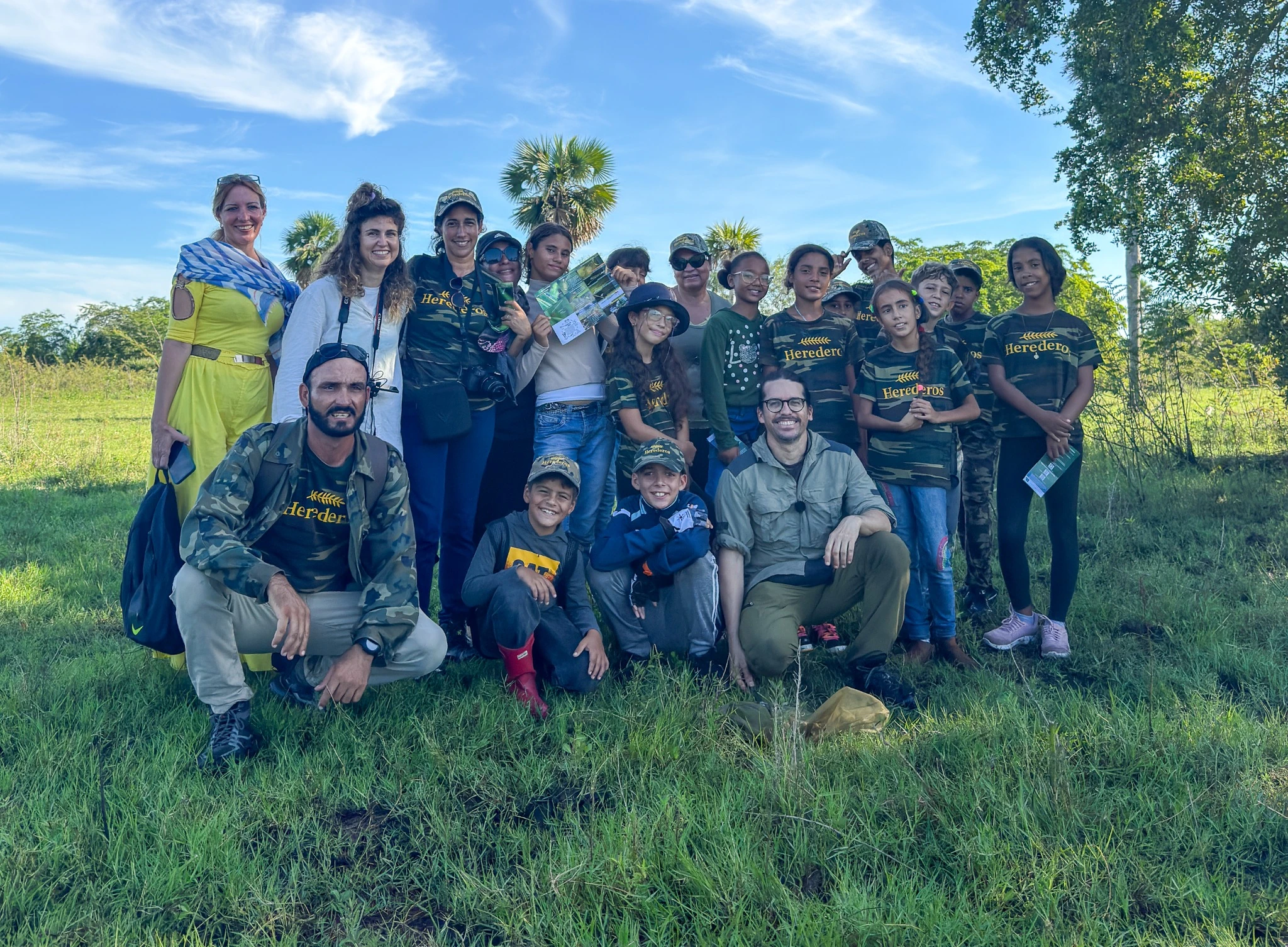
Nature photography and documentary filmmaking play a central role in these efforts, making scientific discoveries accessible to broader audiences while documenting the habitats, people, and challenges behind conservation research.
By combining science and storytelling, these projects seek to increase the visibility of freshwater biodiversity and inspire greater interest in protecting Cuba’s aquatic ecosystems.
Conservation implications
Research on Cuban dragonflies and damselflies highlights the importance of protecting freshwater ecosystems that support species with restricted distributions and specialized habitat requirements.
The projects emphasize several conservation priorities:
- Maintaining riparian forests and water quality in mountain streams.
- Improving knowledge of poorly surveyed wetlands and freshwater habitats.
- Conducting systematic surveys of threatened and Data Deficient species.
- Updating IUCN Red List assessments using recent field observations and spatial analyses.
- Strengthening collaboration with protected-area managers, researchers, and local communities.
- Using scientific communication and environmental education to increase awareness of freshwater biodiversity conservation.
Together, these efforts contribute to a better understanding of Cuban Odonata and provide evidence to support their long-term conservation.
Selected publications
Torres-Cambas, Y., Trapero-Quintana, A. D., Lorenzo-Carballa, M. O., Newell, D., Suriel, C., & Cordero-Rivera, A. (2015). An update on the distribution of threatened odonate species from the Greater Antilles. International Journal of Odonatology, 18(2), 89–104.
Torres-Cambas, Y., Cabana-Otero, M., Lorenzo-Carballa, M. O., & Cordero-Rivera, A. (2016). Conservation status and protection of three Antillean endemic damselflies. Journal of Insect Conservation, 20, 277–284.
Lorenzo-Carballa, M. O., Torres-Cambas, Y., Ferreira, S., Trapero-Quintana, A. D., & Cordero-Rivera, A. (2016). Microneura is a junior synonym of Protoneura (Zygoptera, Coenagrionidae). International Journal of Odonatology, 19(1–2), 13–22.
Trapero-Quintana, A. D., Torres-Cambas, Y., Rivas-Torres, A., Ferreira, S., & Cordero-Rivera, A. (2020). The Odonata of Zapata peninsula (Matanzas, Cuba), the largest wetland system of the Caribbean. Odonatologica, 49(1–2), 15–28.
Project information
The research and conservation initiatives have received support from the IUCN Species Survival Commission (SSC), the Indianapolis Zoological Society’s Wild Futures Small Conservation Grants, the Leibniz Institute of Freshwater Ecology and Inland Fisheries (IGB), and the Dragonfly Society of the Americas.
Fieldwork and outreach activities involve collaborations with Cuban researchers, conservation specialists, artists, filmmakers, and local communities.